I've been in the retractable screen business for over 20 years and if there's one thing I've learned, it's that the screens themselves are what separate a truly modern screened-in porch from something that looks like it belongs in 1987. Seriously. You can spend a fortune on furniture, lighting, and a gorgeous tongue-and-groove ceiling. But if you've got those old aluminum-frame screen panels with the spline that pops out every other year? It doesn't matter how nice the rest of it is.A modern screened-in porch starts with the screening system. Retractable screens whether manual or motorized have completely changed what's possible with porch design. They give you the flexibility to enjoy a fully open-air space when you want it and a bug-free, shaded retreat when you need it. No permanent visual clutter. No seasonal removal and storage. Just clean lines and effortless function.This guide covers everything from screen types and materials to design styles and real-world considerations. I'm going to be opinionated I make screens for a living, so I'm obviously biased. But I'm also going to be honest about what works, what doesn't, and what actually matters when you're planning a modern screened-in porch.
If you're reading about modern screened-in porch ideas in 2025, retractable screens should be at the top of your list. Here's why: they solve the biggest problem traditional screens create they're always there, even when you don't want them. Traditional fixed screen panels block a percentage of your view 100% of the time. Even the best mesh still reduces visibility and makes your porch feel more closed-in than it needs to be.Retractable patio screens change the equation entirely. When you want the screens down for bug protection or shade, they're there. When you want to enjoy an unobstructed sunset or an open breeze, they retract into a slim housing that's barely noticeable. The fabric options have expanded significantly too. You're not limited to just basic insect mesh anymore. Modern retractable systems offer everything from fine insect mesh to solar shade fabrics that block 80%, 90%, or even 97% of UV rays. Some homeowners use insect mesh on the sides that face their backyard and solar fabric on the sun-facing side. That kind of flexibility just isn't possible with fixed screens. There's also the durability factor. A good retractable screen system with side tracks or a zipper-guided system keeps the fabric taut and secure, even in moderate wind. The fabric is protected inside the housing when retracted, which means it's not constantly exposed to sun and weather like a fixed screen is. That translates to a longer lifespan and less maintenance. Whether you go with a motorized system or a manual pull-down, retractable screens are what give a modern porch that clean, sophisticated look that design magazines love to photograph.
.jpg)
The decision to screen in a porch goes beyond mere looks, addressing multiple practical benefits that enhance the quality and usability of your outdoor space. From increasing comfort levels to boosting home value, there are numerous reasons why screened-in porches are a wise investment.
Let's start with the obvious one bugs. Mosquitoes are more than annoying; depending on where you live, they carry real health risks. A screened porch eliminates that concern entirely and lets you actually relax outside during peak mosquito hours without bathing in DEET. But comfort goes beyond bugs. Screens also filter out dust, pollen, and debris. If you or anyone in your household deals with allergies, a screened porch becomes a genuinely therapeutic outdoor space. Air still circulates freely you still get that breeze but the screens act as a first line of defense against airborne irritants. And if you choose solar screen fabrics, you're also knocking down the temperature on your porch significantly. A 90% solar fabric can reduce the perceived temperature by 10-15 degrees compared to direct sun exposure. That's the difference between a porch you use for 20 minutes and one you spend the entire afternoon on.
A screened-in porch is one of the few home improvements that delivers both daily lifestyle value and measurable financial return. Industry data from Angi shows that screened-in porches return 70-84% of their investment at resale, with the highest ROI in warmer climates where outdoor living is year-round. Think about it practically. You're adding functional square footage to your home without the cost of a full room addition. No HVAC, no insulation, no drywall. A screened porch serves as a dining room, a living room, a home office, or an entertainment space depending on how you furnish it. It's the definition of indoor-outdoor living and that's not just a design trend, it's how people actually want to live.
Here's where modern screening really shines versus the old approach. Traditional screened porches protect you from rain and wind to some extent, but they also permanently reduce your view and your connection to the outdoors. Retractable screens give you weather protection on demand. Storm rolling in? Drop the screens. Beautiful calm evening? Retract them completely and enjoy the open air. If you pair insect mesh with a solar shade on the sun-facing side, you've got protection from UV, glare, wind, and bugs all of which retract when conditions are perfect. This is especially valuable if you have outdoor furniture you want to protect. UV damage is the number one killer of patio furniture fabric and finishes. Running your screens down during peak sun hours dramatically extends the life of everything on your porch.
Design principles for modern porches vary significantly between Eastern and Western styles, each type offering unique characteristics. Understanding these stylistic differences allows homeowners to choose a design that best suits their living preferences and environmental context.
Eastern porch designs tend to lean into traditional craftsmanship think detailed woodwork, natural stone or brick foundations, and a strong connection to the surrounding landscape. Cedar and oak railings, intricate trim work, and warm earthy tones define this style. What makes an Eastern porch "modern" is the screening system. Swap out those old aluminum-frame panels for a retractable screen with color-matched housing and tracks, and suddenly a traditional porch feels completely updated. The architecture stays classic, but the functionality jumps forward by decades. Eastern-style porches are particularly popular in wooded areas, garden-heavy properties, and homes with established landscaping. The porch frames the view rather than competing with it. Fine insect mesh preserves visibility while keeping everything from mosquitoes to no-see-ums out.
.jpg)
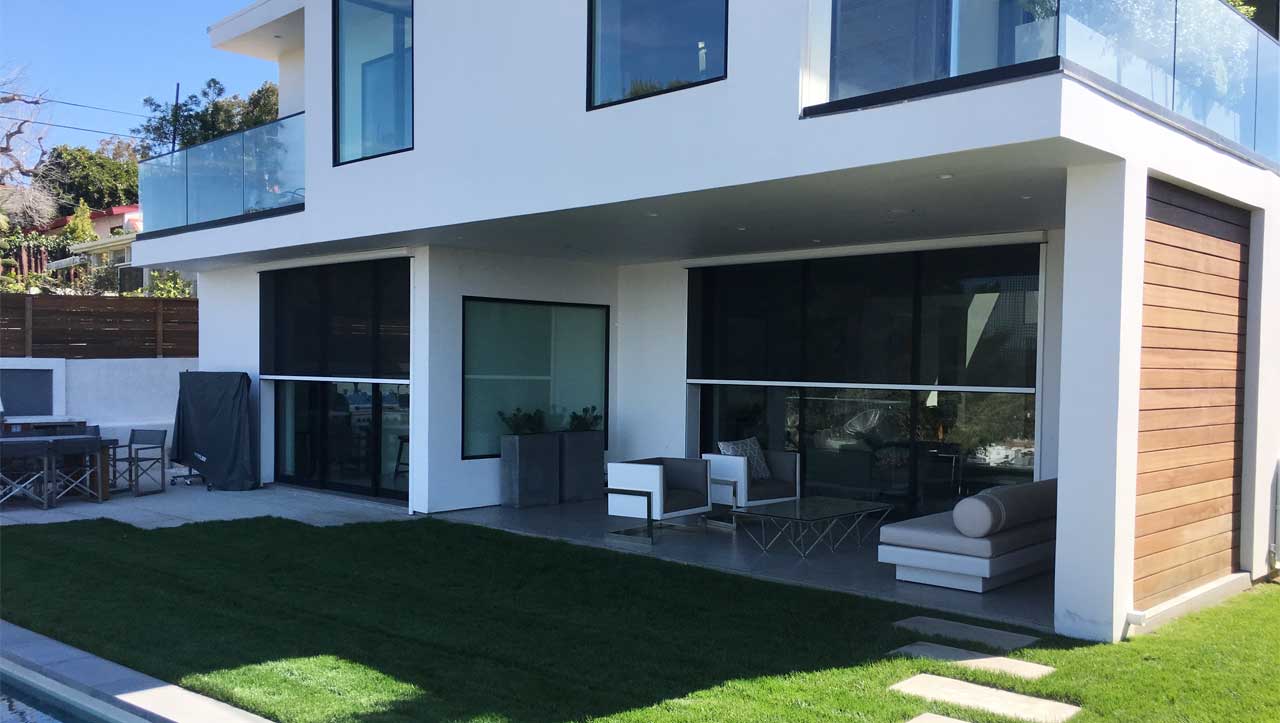
Western porch design often called a California Room takes the opposite approach. Instead of enclosing a space, the goal is to keep it as open as possible. These porches typically feature one or more completely open sides, minimal structural framing, and a strong emphasis on views. California Rooms have exploded in popularity over the last decade, and for good reason. They're essentially covered patios with the option to add screening and shade when needed. Retractable solar screens are the natural fit here they modulate sunlight and provide bug protection without adding permanent barriers that would defeat the whole purpose of the design. The aesthetic leans contemporary: clean lines, minimal ornamentation, sleek outdoor furniture, and a seamless flow between indoor and outdoor spaces. If your home has large sliding or folding doors that open to the patio, a California Room with retractable screens creates that magazine-worthy indoor-outdoor living experience. For patio shade ideas that complement a California Room setup, solar fabrics in the 90-95% range are the sweet spot they cut the heat and glare without making the space feel enclosed.
.jpg)
The South has its own porch tradition that deserves mention. Southern porches tend to be larger, often wrapping around two or more sides of the house. The modern Southern porch keeps that generous scale but updates the materials and screening. Motorized screens are particularly popular for Southern porches because of the span sizes involved. When you're screening an opening that's 15 or 20 feet wide, manually operating a screen becomes impractical. A motorized system with a remote or smart home integration makes it effortless drop the screens before dinner, retract them after the mosquitoes die down for the evening. Ceiling fans, outdoor-rated lighting, and a fireplace or fire pit nearby are Southern porch staples that pair naturally with a modern screening system.
I get this question constantly, and my honest answer depends on one thing: how many openings are you screening? If you have a single door or one small porch opening, a manual retractable screen is a great fit. It's budget-friendly, simple to operate, and there's virtually nothing to break. You pull it across, it locks in place, you release it to retract. Done. But the minute you're talking about a porch with 3, 4, or more openings? Motorized is the only way to go. Picture this: you're hosting dinner on the porch, the sun starts hitting from the west side, and the mosquitoes come out as it cools down. With motorized screens, you press one button and every screen drops simultaneously. With manual screens, you're excusing yourself from the table to walk around pulling down each screen individually. It kills the vibe. Motorized porch screens also integrate with smart home systems Alexa, Google Home, dedicated remotes, wall switches, or even timers and sun sensors. Some of our customers have their screens set to automatically drop at sunset and retract at sunrise. It's hands-free outdoor living. The cost difference is real motorized systems run roughly $3,000 to $6,000 per opening versus significantly less for manual options. But for most people screening a full porch, the convenience factor makes motorized worth it. For a deeper comparison of what's on the market, check out our breakdown of the best motorized retractable patio screens. And if budget is the primary concern, manual retractable screen doors are still a huge upgrade over fixed panels. Don't let the perfect be the enemy of the good.
Manual screens represent an economical choice for those looking to affordably screen their porch. Simplicity in design ensures ease of use and maintenance, reducing concerns over potential mechanical failures.While manual screens require some physical effort to open or close, their simplicity and lack of complex parts make them less prone to technical issues, making them a reliable choice for many. Simplicity does not mean compromising on style or durability, as many manual screens come in various patterns and high-quality materials.
Low Maintenance: Less likelihood of mechanical failures.
Budget-friendly: Ideal for cost-conscious homeowners.
Customization Available: Various styles and colors to choose from.
Manual screening solutions might be the best fit for those who want simplicity and reliability combined with flexibility in design.
On the other hand, motorized screens offer convenience and a touch of luxury with remote-control or automated systems. These screens can easily be operated with the push of a button, making them ideal for tech-savvy individuals who prioritize modern features. Although there may be a higher initial investment, the value lies in ease of use and the modern touch they bring to outdoor spaces.Motorized screens enhance usability without the need for hands-on adjustments, which could be especially beneficial for larger porches or for people with mobility challenges. When integrated with home automation systems, they can even adjust based on the weather, further amplifying the space's comfort.
User Convenience: Remote accessibility enhances user experience.
Seamless Integration: Fits well with smart home technologies.
Luxury Appeal: Adds a touch of modern sophistication to any porch.
Motorized options suit those who are willing to invest a bit more for advanced functionality and contemporary elegance in their screened porch. The choice between manual and motorized screened porches ultimately reflects personal preferences for convenience, technology integration, and budget considerations.
This is where my 20+ years of screen nerdery really comes out. Screen material matters more than most people realize, and it's one of the biggest factors in how your porch will actually perform. The two broad categories are insect mesh and solar shade fabric. Insect mesh is exactly what it sounds like a fine woven mesh designed to keep bugs out while maximizing airflow and visibility. If bug protection is your primary concern and your porch isn't in direct harsh sun, insect mesh is the way to go. Solar shade fabrics are rated by their UV blockage percentage. Here's the quick rundown: An 80% fabric blocks most of the sun but still lets quite a bit of light through. Good for areas with moderate sun exposure. A 90% fabric is the most popular choice overall. It cuts heat and glare significantly while still allowing you to see through the screen clearly. This is the sweet spot for most porches. A 95% fabric provides near-complete sun blockage. Great for west-facing openings that get hammered by afternoon sun. Visibility is slightly reduced but still decent. A 97% fabric is essentially a blackout shade for exterior use. Maximum heat and UV reduction, but you're sacrificing most of your outward visibility. Best for openings where privacy or extreme sun protection is the priority. Here's the critical thing most people don't know: there's a massive difference between interior and exterior screen fabrics. Interior solar fabrics have a fiberglass core. Exterior fabrics use nylon. This matters because fiberglass-core fabric will not last outside — it degrades in UV exposure, which is ironic given that it's supposed to block UV. If a screen company is quoting you "5% solar fabric" instead of "95% solar fabric," they're using interior terminology, and that's a red flag that they may not understand exterior applications. Your climate should drive the material choice. Moderate climates with a primary bug concern? Insect mesh. Hot, sunny climates? Solar fabric in the 90-95% range. Coastal with wind concerns? Look for systems with side tracks or zipper guides that keep the fabric locked in place. For more details on what motorized retractable screens cost across these material types, we've broken that down separately.
The local climate plays a significant role in determining the appropriate screen material. For areas prone to heavy storms, aluminum screens may provide greater durability against severe weather conditions due to their robust structure. Conversely, fiberglass screens, known for flexibility and affordability, might be preferable for regions with milder climates.
Insect Screens: Slightly more affordable and flexible, favored in moderate climates.
Solar Screens: Often used for climates demanding high durability or need some sun or weather protection in addition to a breeze.
Understanding your climate will help you make an informed choice about the screen material that best suits your porch.
Since we're talking about modern screened-in porch ideas, a quick note on furnishing: the screen system you choose affects your furniture decisions more than you might think. With retractable screens, your porch functions as both a fully open patio and an enclosed room, depending on the moment. That means your furniture needs to work in both scenarios. Weather-resistant materials are still important even with screens, rain can blow in at angles, and humidity is a constant in many climates. Sunbrella fabrics are the industry standard for outdoor cushions, and for good reason. They resist fading, mildew, and moisture while still feeling comfortable. Pair them with aluminum, teak, or all-weather wicker frames for seating that looks great and holds up over time. For lighting, consider a mix of overhead fixtures (ceiling fans with integrated lights are a Southern porch classic) and ambient options like string lights or wall-mounted sconces. If your screens are motorized, coordinate the lighting with your smart home setup so one button dims the lights and drops the screens for movie night on the porch. Keep the layout flexible. Modular seating that can be rearranged works better than heavy fixed pieces, especially if you're hosting everything from casual family dinners to larger gatherings.
If you're ready to transform your outdoor living space, exploring diverse screened-in porch ideas is a fantastic place to start. By integrating contemporary design elements and leveraging the latest technology, you can create a screened-in porch that not only elevates the aesthetic appeal of your home but also enhances its functionality. Consider incorporating sustainable materials and smart home integrations, such as automated lighting and retractable screens, to create a relaxing and eco-friendly environment. Additionally, focusing on furniture that blends comfort with style will ensure your porch becomes a favorite gathering spot for family and friends. Keep in mind key factors like climate, privacy, and intended use to tailor your design to perfectly fit your lifestyle. As more homeowners seek to maximize their outdoor spaces, staying on trend with innovative ideas will not only increase the enjoyment of your home but can also add significant value to your property.

We Believe in Highly Trained and Skilled Local Technicians to Sell, Service & Install Our Products